Why automated edge banding matters
Customers see and touch the front edge of a shoe cabinet, the corners of a drawer front and the sides of a wardrobe door. A visible glue line can make a new piece look poorly finished. A lifted corner can catch during cleaning or handling. If a joint opens and exposes the board core, moisture can enter and cause local swelling.
The value of an automated edge bander is repeatability. With the right setup, the machine feeds panels steadily, applies adhesive, presses the edge strip into place and trims the excess. That helps a batch of cabinet doors match the approved sample. The bond depends on the board, edging and adhesive, so check each material combination on a finished sample.
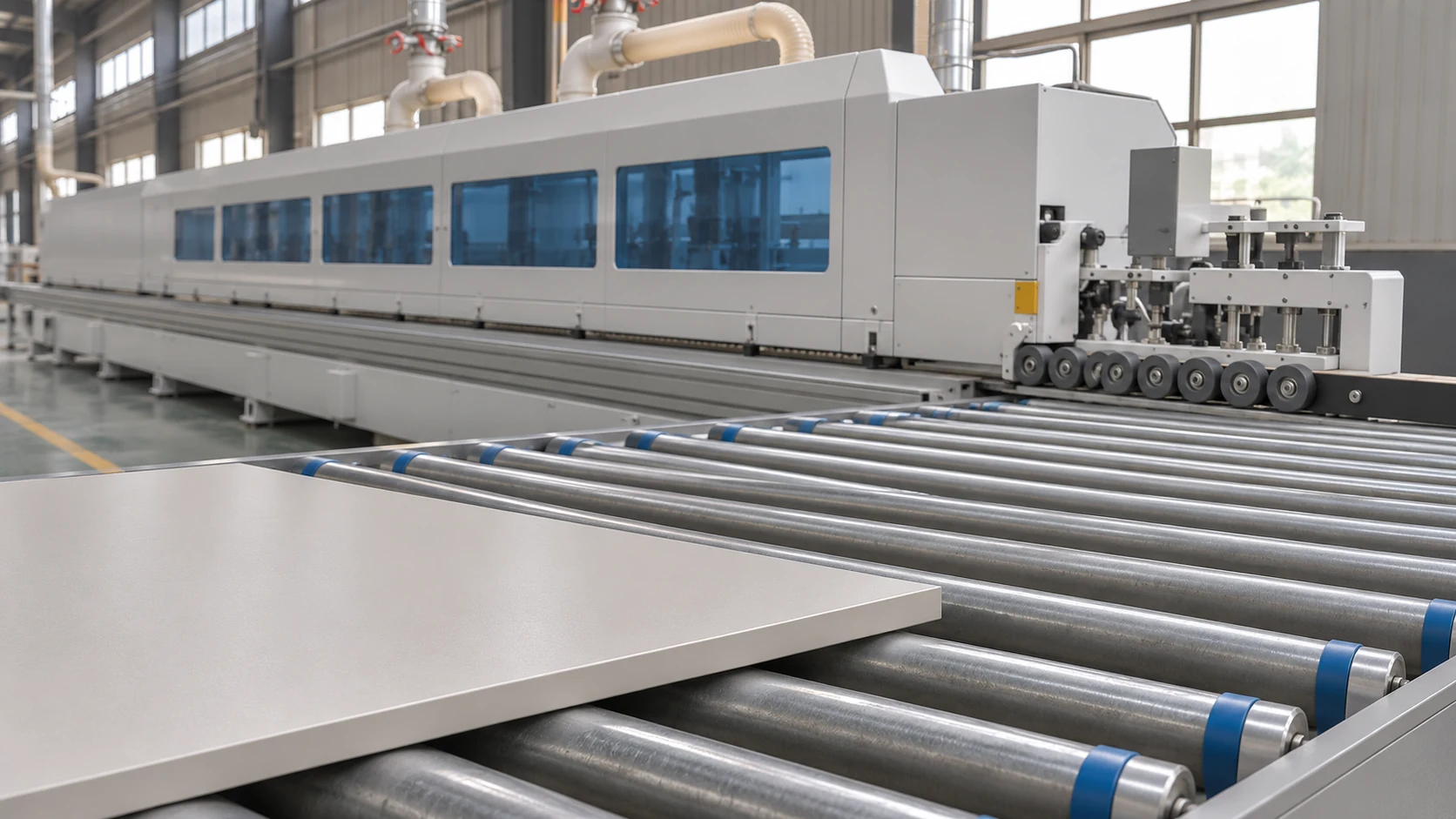 A straight-line edge-banding line and its outfeed conveyor.
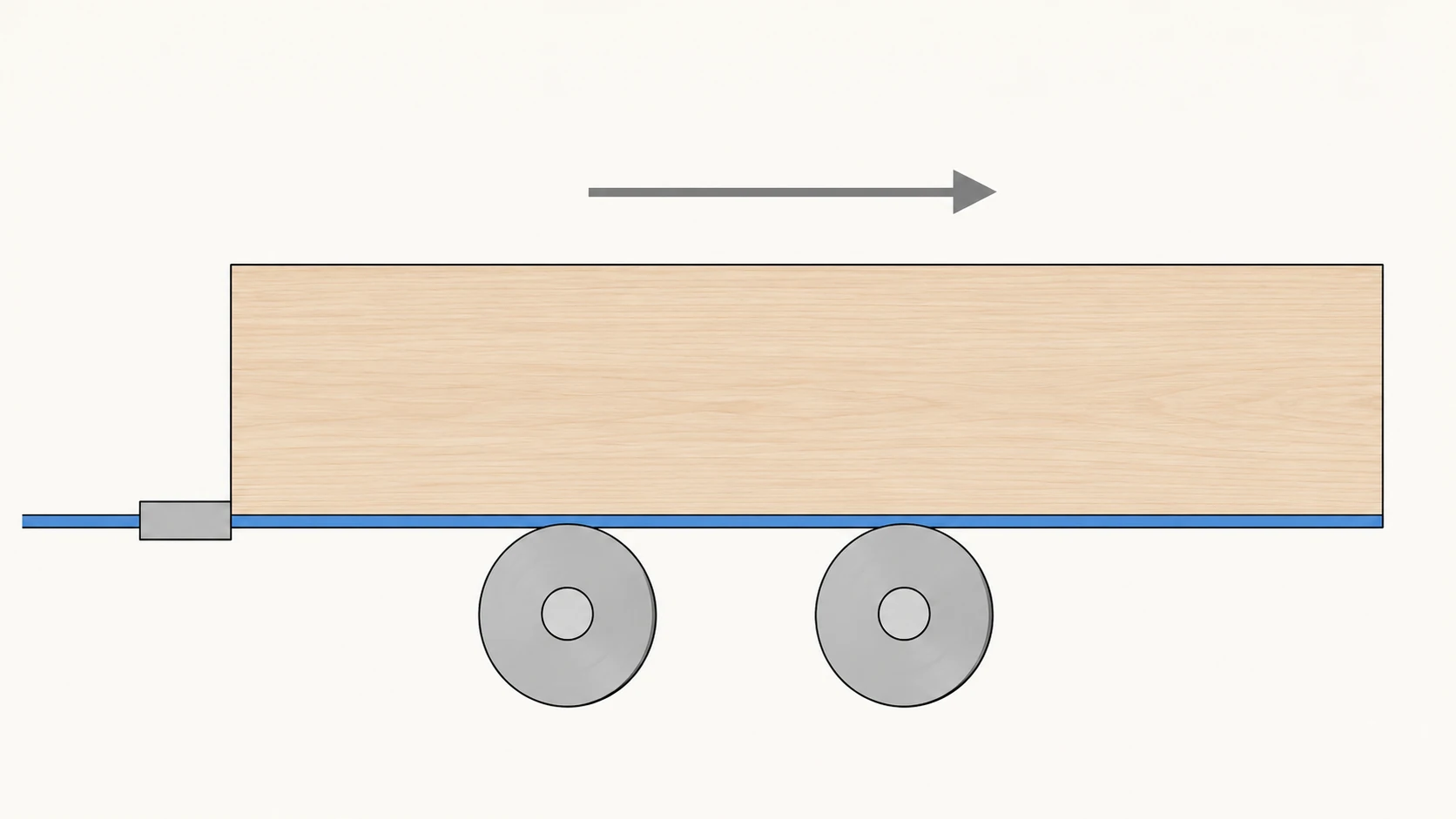 Top view of the pressure rollers pressing the edging against the panel.
Read the MDF and particleboard edge-banding study
How accurate drilling helps assembly
The holes in a flat-pack cabinet need to match the hardware supplied in the box. A runner should sit squarely on its mounting points. A hinge should fit its opening and allow the adjustment needed to align the door. Clean hole edges also matter where fittings leave the surrounding surface visible.
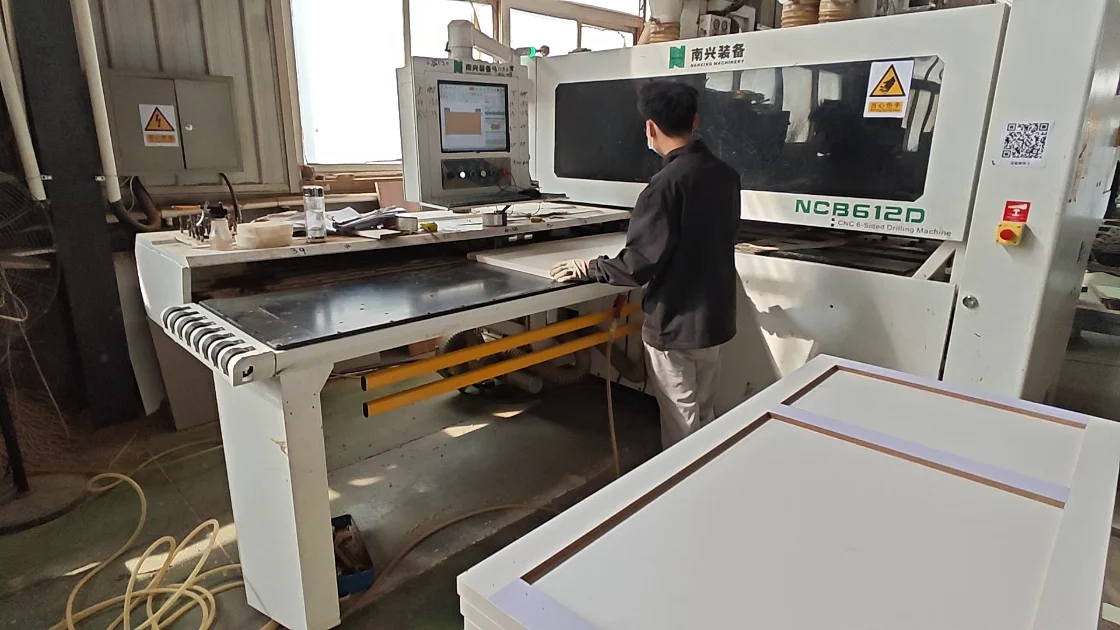 Furniture panel drilling at the workshop.
Assemble one complete unit using the hardware and instructions the customer will receive. Open and close the drawers, check the door gaps and see whether the panels sit flush. This helps catch fit problems that are easy to miss when inspecting separate boards.
See Hettich’s furniture fittings guide
Compare the cost after delivery
Suppose two batches each contain 500 cabinets. One generates ten assembly or edge-related claims and the other generates three. At €45 per claim in parts, delivery and handling, the difference is €315.
€0.63 per cabinet ordered
This illustration shows how a difference in claims can change the effective cost of a bulk order.
Use your own claims history when comparing quotes. Include the costs your team actually pays, such as spare parts, freight and staff time.
Read ASQ’s guidance on quality costs
What to request before placing an order
Before approving a bulk order, ask the supplier for three pieces of evidence.
- Close-up photos of the finished edges, joints and corners.
- A trial assembly using the hardware supplied with the order.
- A written list of the checks to repeat before dispatch.